Die Obstmuckelei


Introducing Obstmuckelei
Organic fruit growing and habitat in the Havelland
Obstmuckelei is my contribution to a sustainable agriculture. On the organic-certified area, we connect the production of high-quality food with the protection of regional biodiversity. It is a place where ecological production and natural retreat for wild animals and plants go hand in hand. This realization fascinates me and drives me.
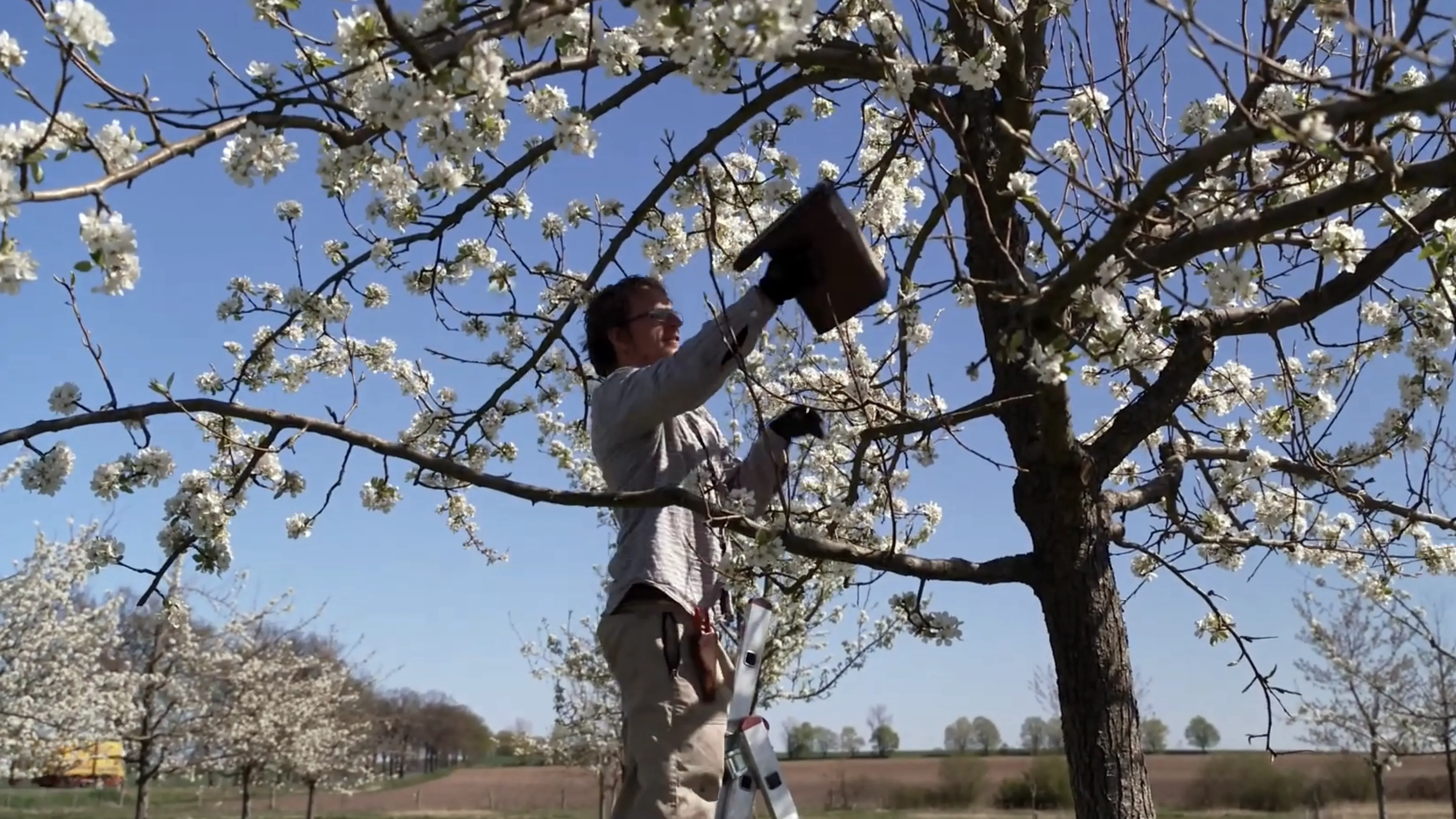
My name is Konstantin Schroth. I studied Land Use and Nature Conservation, am a certified fruit tree arboriculturalist, and have been managing the Obstmuckelei since 2020.
I am particularly passionate about untreated, fully ripe fruit and our local flora and fauna.
That is why I do what I do. I appreciate your interest – if you have any questions or suggestions, please feel free to reach me directly via my contact form.
Fruit tree pruning, tree planting and consulting?
Please also visit me at der-obstbäumerich.de
Obstmuckelei in numbers
Organically certified area
Fruit trees and shrubs
Hedges and shrubs
New plantings since 2020
Since taking over the orchard in 2020, I have planted over 150 new trees and about 500 hedging plants. Establishing and developing these plants requires continuous care – from watering and pruning to soil improvement and tree disc maintenance.
My goal is the sustainable production of dessert fruit, cider fruit, and nuts, while successively increasing the proportion of wild fruit.
Origin & Securing of the area
A sensation: Joint acquisition in 2020
2020, we were able to acquire the area together with Kulturland and many supporters. For me personally, that was a sensation. Through an open-ended lease agreement, there is now a long-term perspective for the orchard.
Management & Outlook: Thinking in decades
Diversity in times of climate change
Managing an orchard means thinking in decades. Because many of the trees here can live to be over 100 years old. Therefore, I am concerned with which tree and shrub species (or which varieties) will still be able to grow here in the 22nd century and provide a benefit for people and the environment. To find answers, I rely on a diversity of fruit types and varieties as well as various management methods. In addition, there is a continuous exchange with colleagues from all over Germany.
In addition to 'classic' types of fruit such as apple, pear, cherry, and plum, mulberries, serviceberries, and cornelian cherries also grow in the 'Obstmuckelei'. And it continues steadily in the direction of diversity. Because who knows exactly how warm and dry it will get, which pests will appear, and what will happen with our groundwater?